Tour description
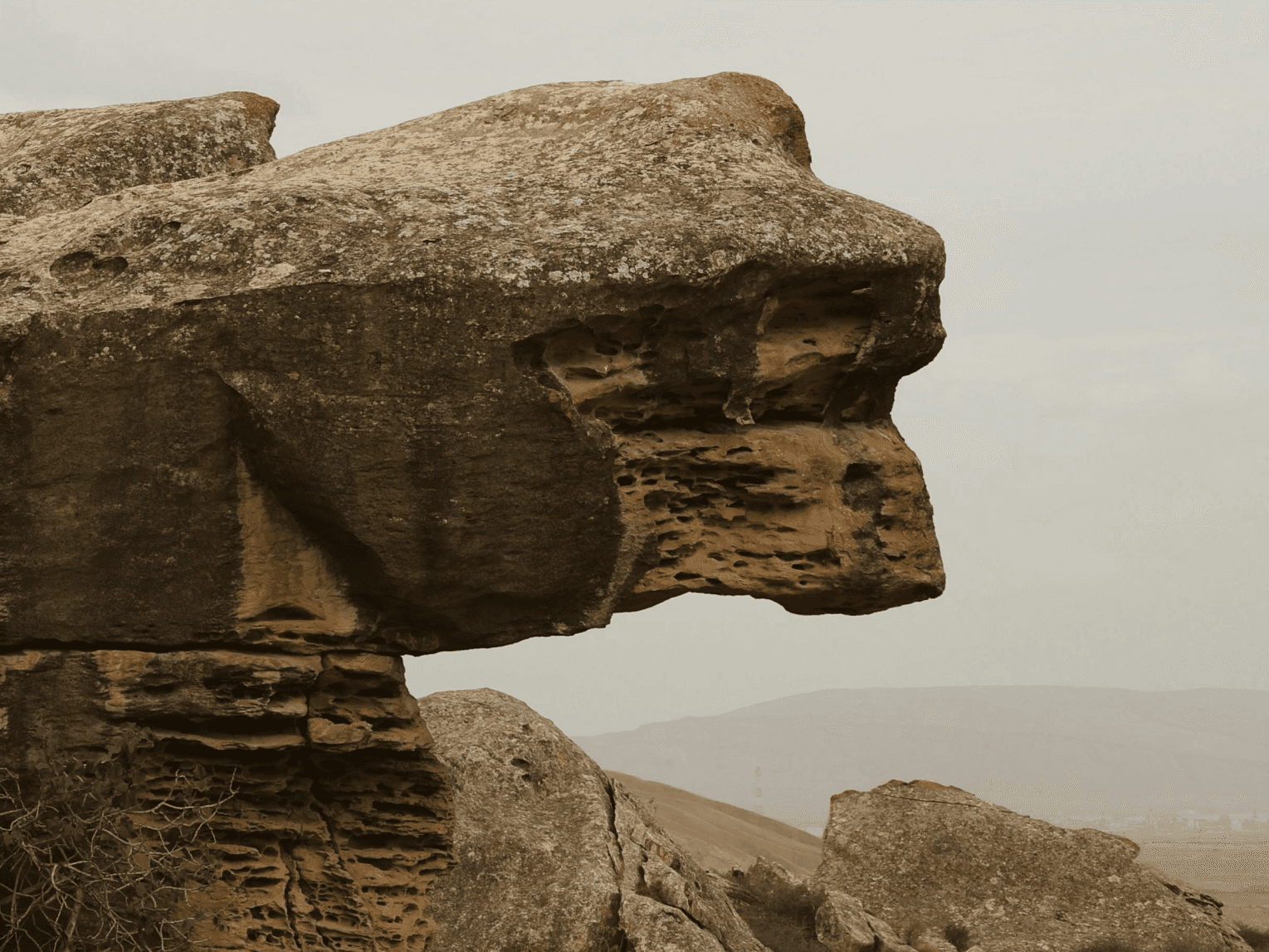
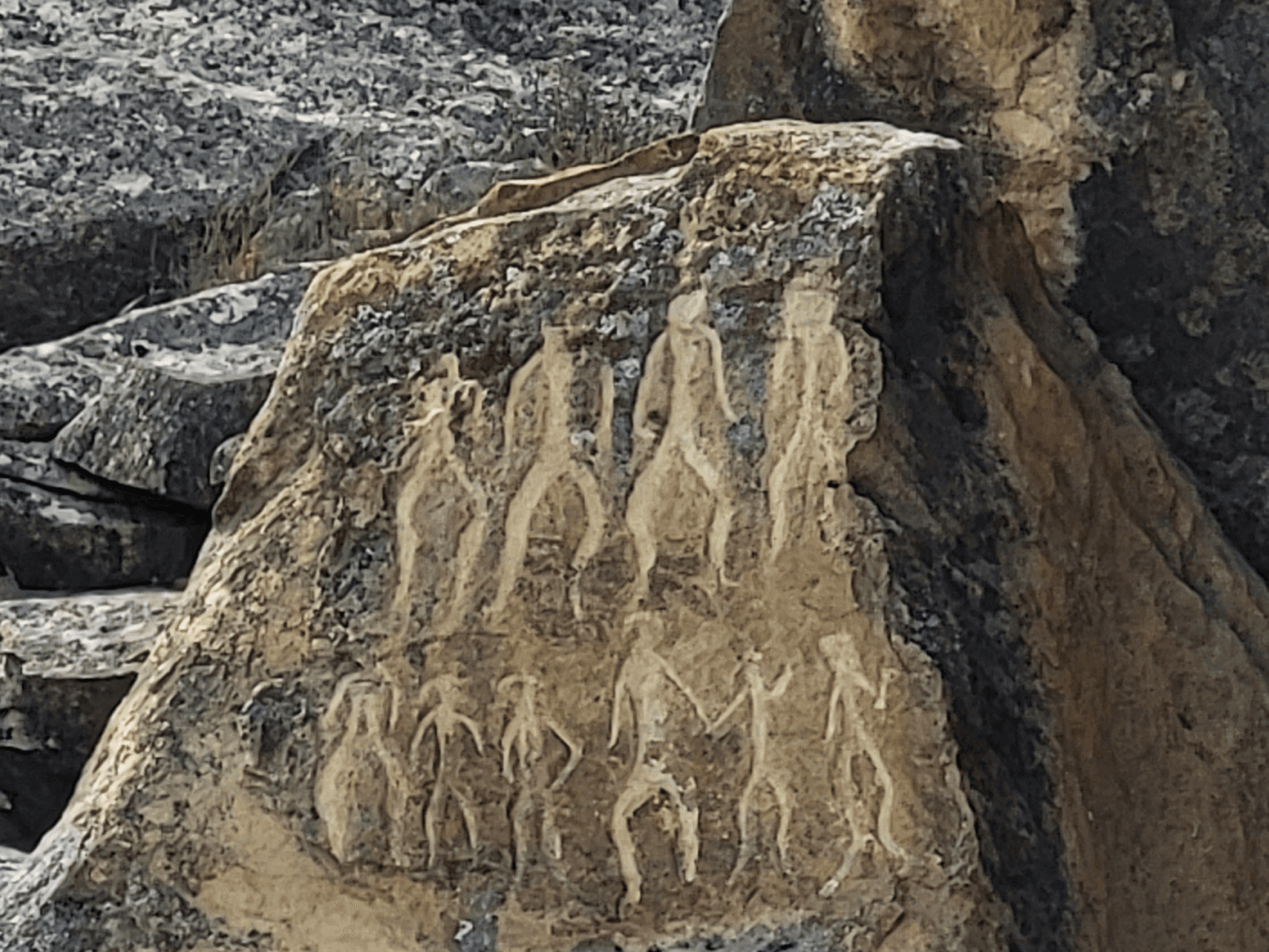
Open-air rock art museum. The rock carvings of Gobustan belong to different epochs and date from the 10th-8th millennia BC to the Middle Ages. Covering such a vast historical period, they hold a high place among other rock art collections in the world. The stages of development of Gobustan's rock art are clearly visible in the variety of themes, style, composition, and execution techniques, as well as in the fact that from ancient times until recent centuries, they were depicted on top of one another. Through the efforts of archaeologists, more than 6,000 drawings were discovered on 1,000 rocks, along with ancient dwellings—caves and settlements—about 40 mounds, and more than 100,000 items of material culture. The most ancient drawings date back to the Mesolithic era; however, it is assumed that life existed here even earlier, which allows Gobustan to be considered one of the cradles of civilization. After visiting the rock art museum, tourists will travel to the mud volcanoes. For this, it will be necessary to transfer to local transport, as the journey involves traveling on a dirt road.
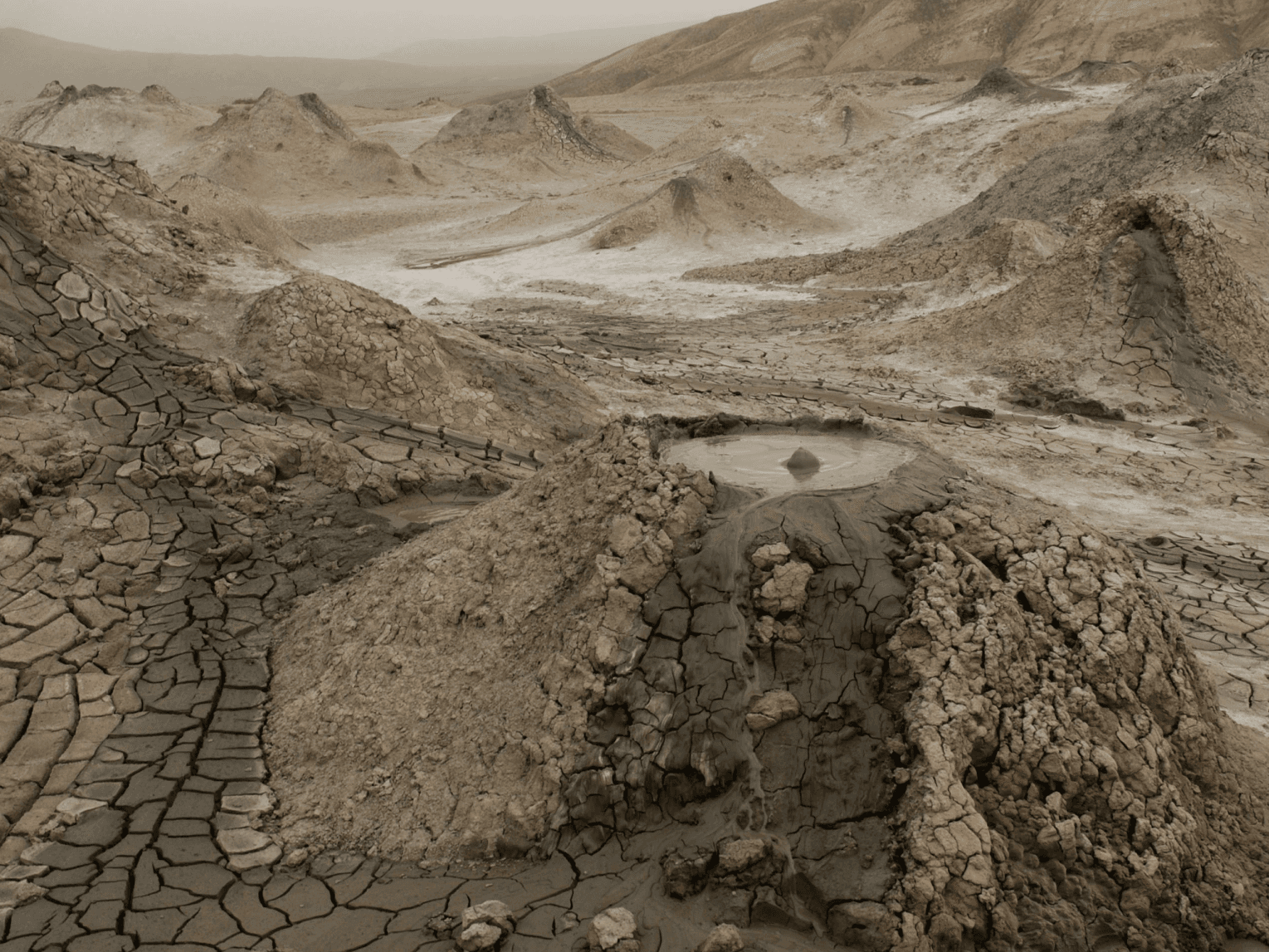
Mud volcanoes are a rather interesting and mysterious natural phenomenon, carrying a vast amount of educational information about the Earth's interior. A mud volcano, acting like a super-deep well, helps geologists in their search for underground fuel stores. At the same time, volcanic mud, containing many valuable chemical elements, is an excellent remedy for many diseases. Volcanic clay, a superb raw material for manufacturing expanded clay and bricks, is widely used in construction. The territory of Azerbaijan is a unique and classic region for studying mud volcanism on our planet. There are more than 300 mud volcanoes on the land of Eastern Azerbaijan and the adjacent Caspian Sea area. In terms of the number of volcanoes, their diversity, and active performance, there is no territory in the world like Azerbaijan.
After visiting the volcanoes, tourists return to Baku.
Gallery