Tour description
The bus with excursionists departs from Baku in a southwestern direction. Information on the following objects is provided along the way:
Bibi-Heybat Mosque. Built in 1257 by the daughter of the seventh Imam, Hakima Khanum. It was destroyed during the years of Soviet power and restored after Azerbaijan gained sovereignty.
Shikhovo settlement. A balneological resort is located here. The resort owes its birth to thermal hydrogen sulfide springs that began to spout during the drilling of oil wells.
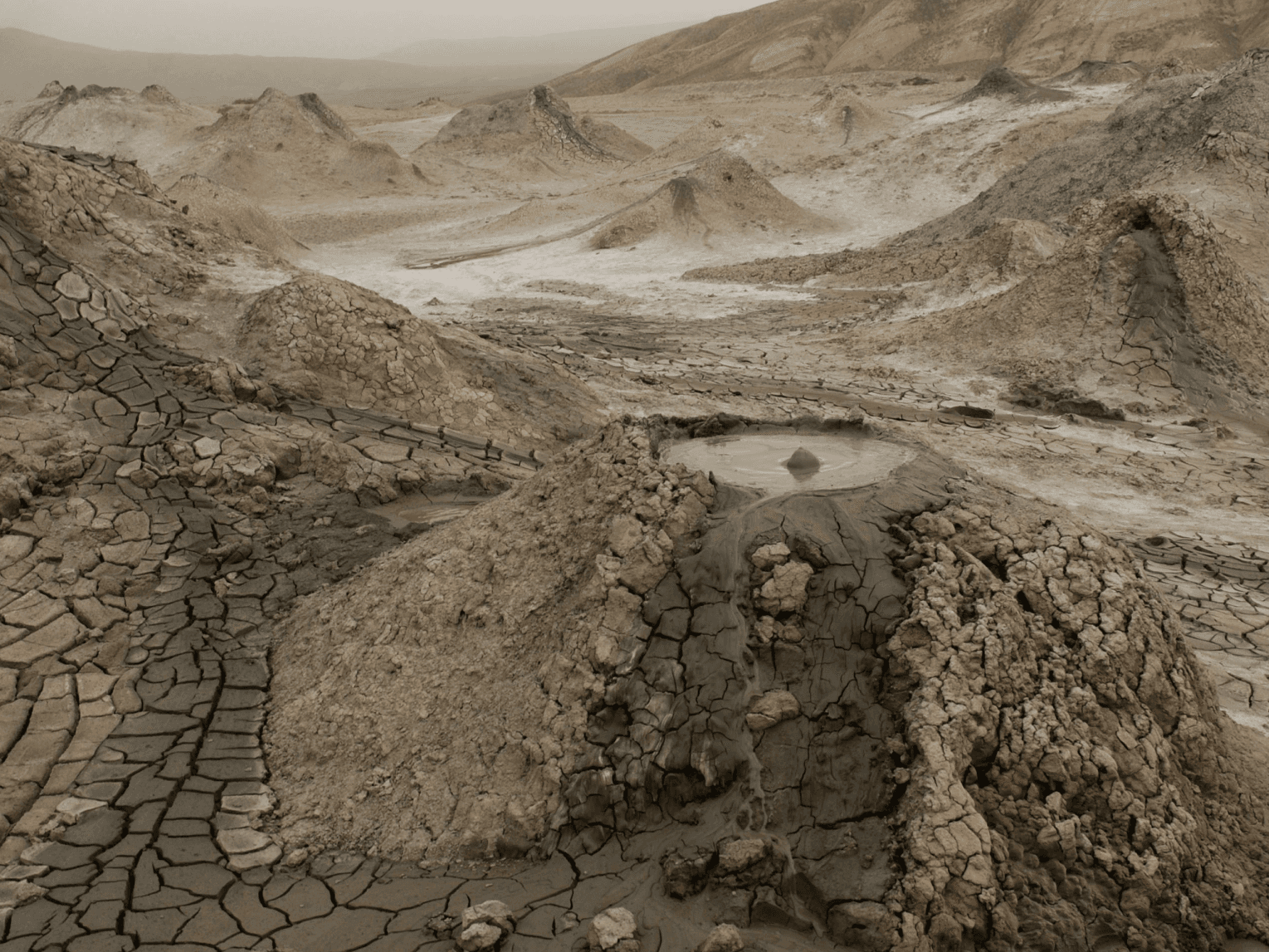
Lokbatan. Information about mud volcanoes, their number (about 250), and the healing properties of volcanic mud.
Karadagh. Cement plant. Deep-water jackets factory. Built in the 80s of the 20th century.
Sangachal settlement. There are 15th-century monuments here—caravanserais and ovdans built by order of the Shirvanshahs on the ancient Silk Road.
Gobustan State Historical and Cultural Reserve
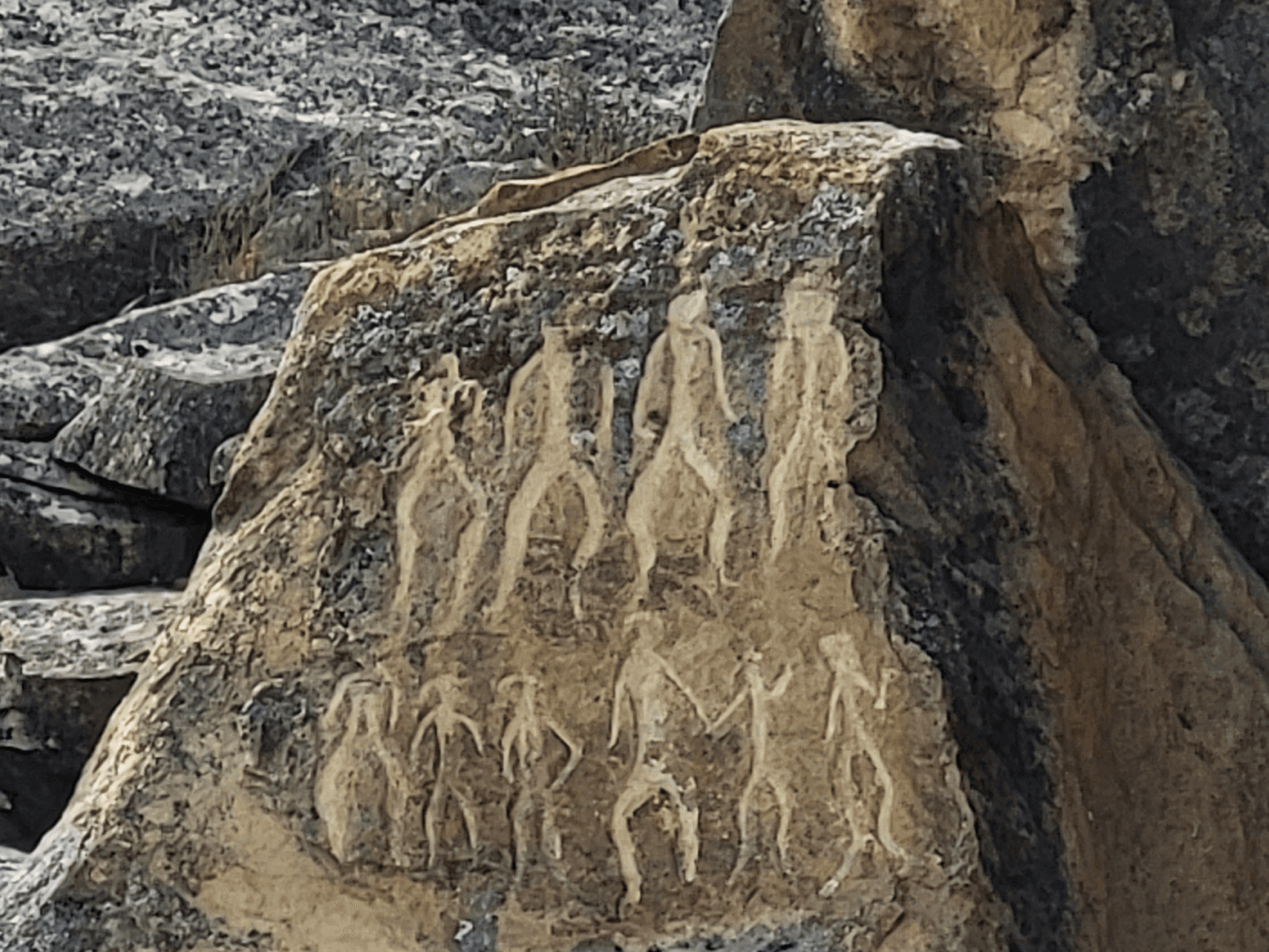
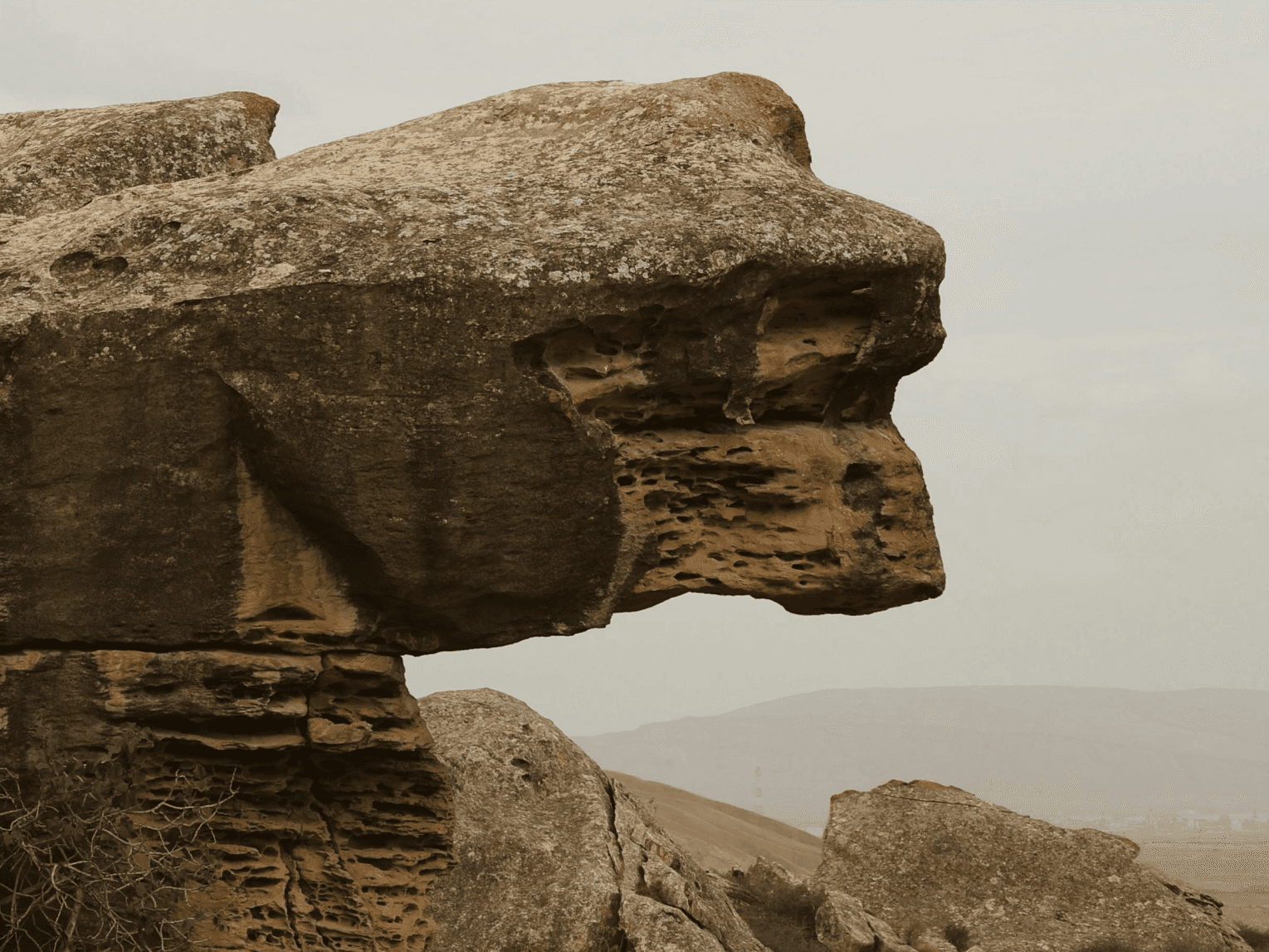
Gobustan is a geographical area with a territory of 100 square kilometers, located between the southeastern foothills of the Caucasus Mountains and the Caspian Sea, crisscrossed by numerous riverbeds and ravines. In Gobustan, there are rocky mountains reaching a height of 600–700 m, covered with a layer of limestone, tectonic uplands, semi-steppes, and mud volcanoes. The climate of Gobustan is very dry; the summer is hot and arid, and the winter is mild. The existence of rock carvings became known to the scientific world in the 1940s. The first researcher of Gobustan monuments was the oldest archaeologist of Azerbaijan, Iskhak Jafarzadeh. He discovered and studied about 3,500 rock carvings, cup-shaped depressions, inscriptions, and other man-made creations on the mountains of Boyukdash, Kichikdash, Jingirdag, and Yazilytepe. Here, in an area of fantastic rock destruction caused by huge blocks falling on top of each other, about 20 large and small caves and shelters were formed, serving people as refuge from the weather. On the walls of these shelters, both inside and out, drawings of people, animals, and various signs are carved. At the sites of "Ana-zaga," "Ovchular zagasy," "Kaniza," "Yeddi gozel," in the settlement of "Boyukdash," and others, a large number of rock carvings, as well as tools, animal bones, production waste, piercers, tips and axes, items of decoration, utensils, and more, were unearthed. The rock carvings of Gobustan belong to different epochs and date from the 10th-8th millennia BC to the Middle Ages. Covering such a vast historical period, they hold a high place among other rock art collections in the world. At the entrance to the reserve territory, tourists are invited to view a small indoor museum exhibition.
Gallery