Tour description
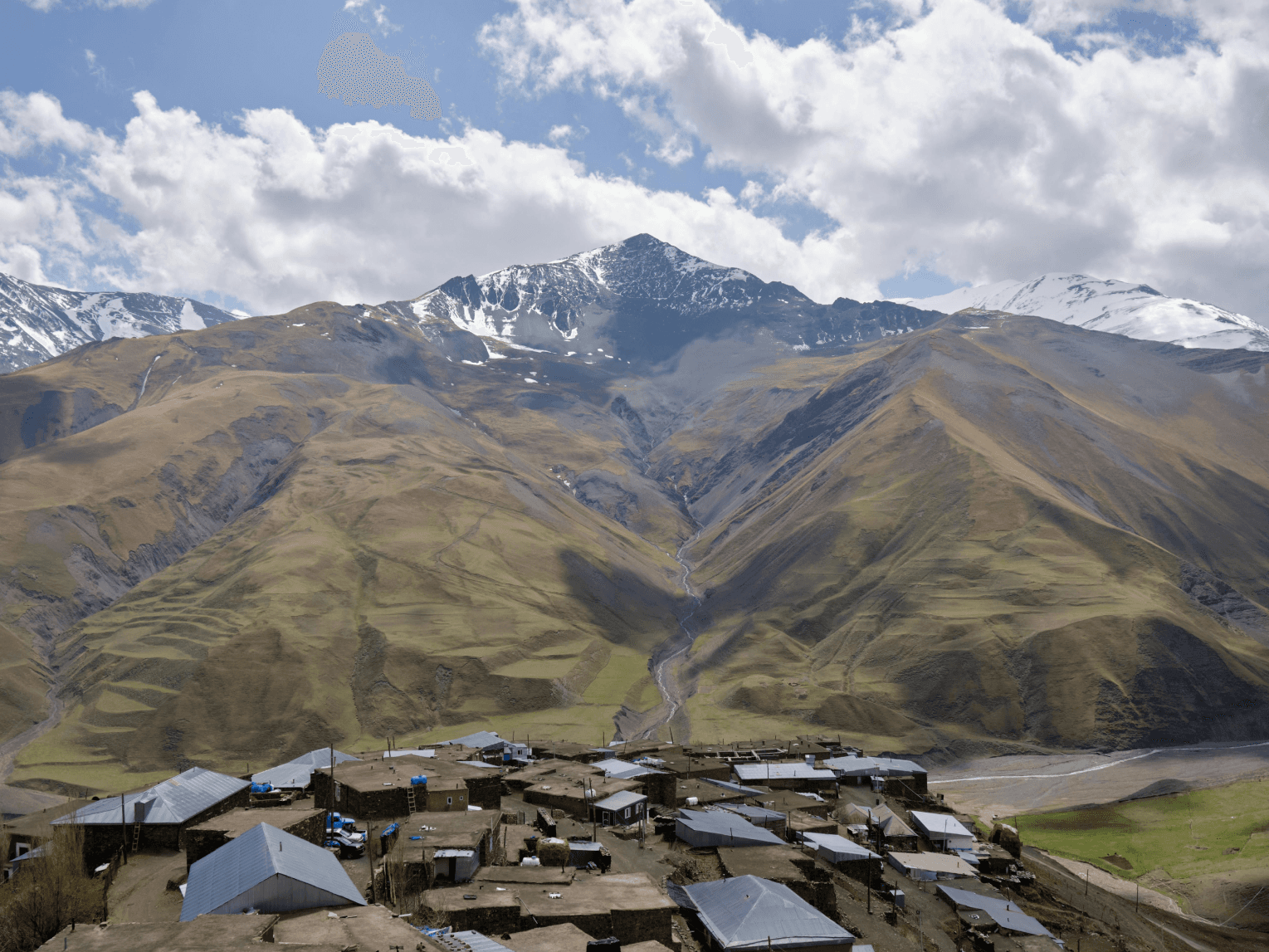
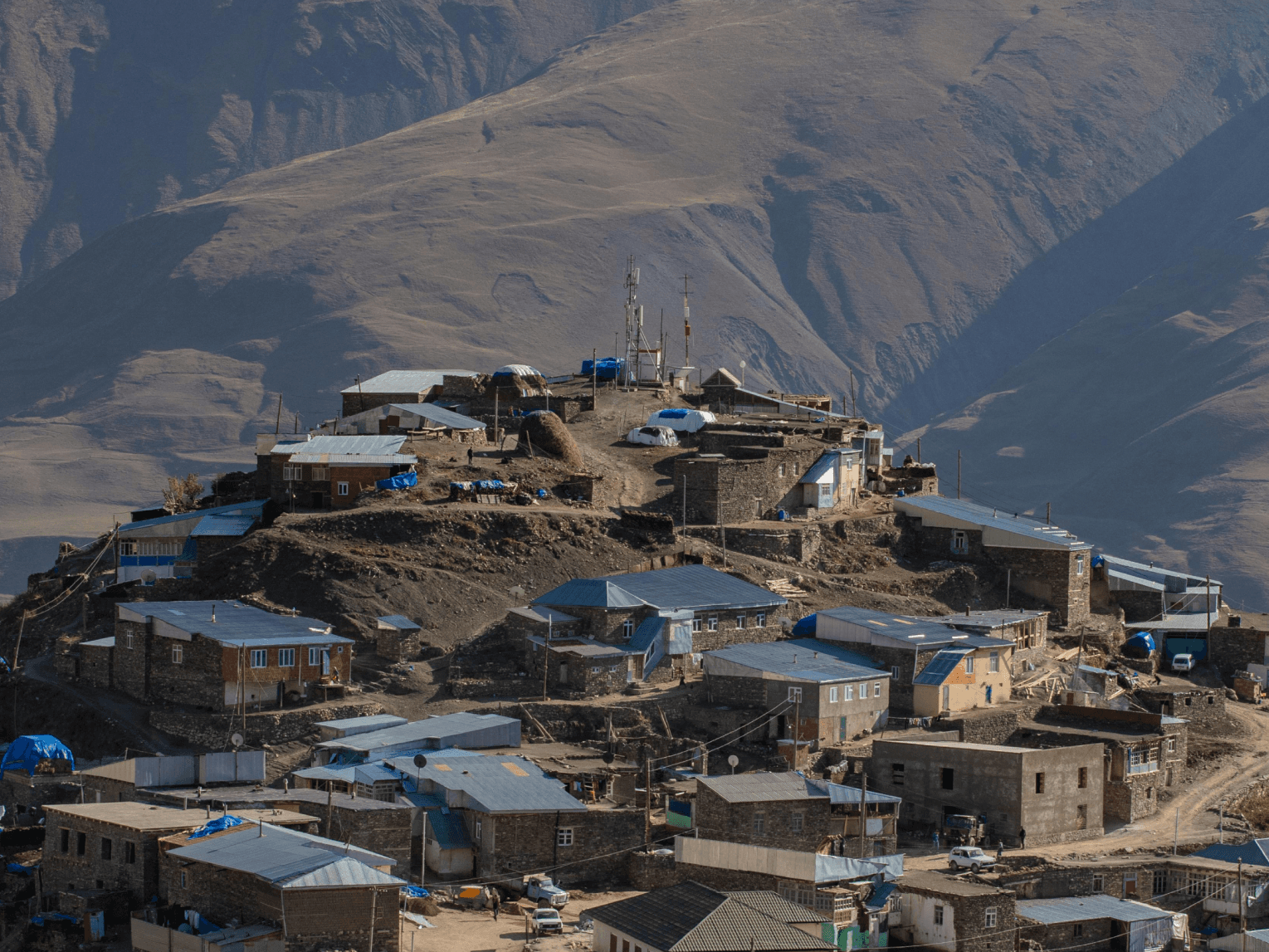
About an hour's drive along the new highway from the administrative center of the Guba region, on the northern slope of the Greater Caucasus Range, at an altitude of 2100-2200 m above sea level, lies the oldest settlement in Azerbaijan – Khinalig. The residents of the village call it Kyat, and themselves – the Kyats – direct descendants of the biblical Noah. Khinalig is more than 5,000 years old. For centuries, this village was cut off from civilization by inaccessible mountains with dangerous rocky cliffs. Due to such isolation, its inhabitants have managed to preserve to this day a unique language that does not belong to any language group, as well as traditions and customs found nowhere else. About 2,000 residents live in Khinalig; all of them are indigenous and are divided into 4 clans. Each clan has its own cemetery and its own patterns for carpets and clothing. The Khinalig people practice Islam, but before Islam, they were fire-worshippers. This is evidenced by fire temples and some semi-pagan traditions that have nothing in common with Muslim ones. The first mentions of the Kyats can be found in the 1st century AD in the works of the ancient Roman historian Pliny and in the famous "Geography" by Strabo. However, the most eloquent evidence of the village's deep antiquity is its 8 large cemeteries, the area of which is much larger than the territory of Khinalig itself. There are burials in 3 or even 4 layers, and inscriptions in various alphabets are carved on the stone tombstones. The Kyats build their houses one above the other: collectively, this resembles a multi-story building, where the roof of one house serves as a courtyard for another house above it. There are about 360 houses in the village, all of them very ancient, aged 200-300 years, and built of cobblestones. The floors and walls of the houses are covered with colorful and warm tikme carpets and blankets, pillows, mattresses, and mutyakka woven by the hostesses. These are not only decorations for the homes but also protection during winter frosts. Winter here is early and very severe; temperatures can reach -30°C. Bricks made from a mixture of straw and manure serve as fuel in winter. They not only burn well but also provide enough heat. Throughout the year, the Khinalig people prepare and dry such bricks wherever there is space. Firewood is a luxury in these parts, as there are few trees in the vicinity. The land is infertile and stony, but locals manage to grow onions and potatoes on small plots. Regarding livestock, they keep small cows and goats, as well as poultry; a few have sheep. In and near the settlement, there are many holy places – pirs with the graves of saints, caves, and unstudied archaeological monuments. Some of them were built back in the Middle Ages: the tomb of Khidyr Nebi, the Sheikh Shalbuz mosque, the Abu Muslim mosque (12th century), and the Pirjomard mosque (1388). Today, Khinalig has ceased to be isolated from the rest of the world, although it remains a unique place. In 2007, the village of Khinalig was declared a State Historical-Architectural and Ethnographic Reserve.
Tourists are accompanied by a guide throughout the entire route.
Gallery